Explainer
A charging stop is a rest break whether you planned it or not
The stop is happening. The only question is whether it happens somewhere with a toilet, food and other people, or in an unlit corner of a retail park.
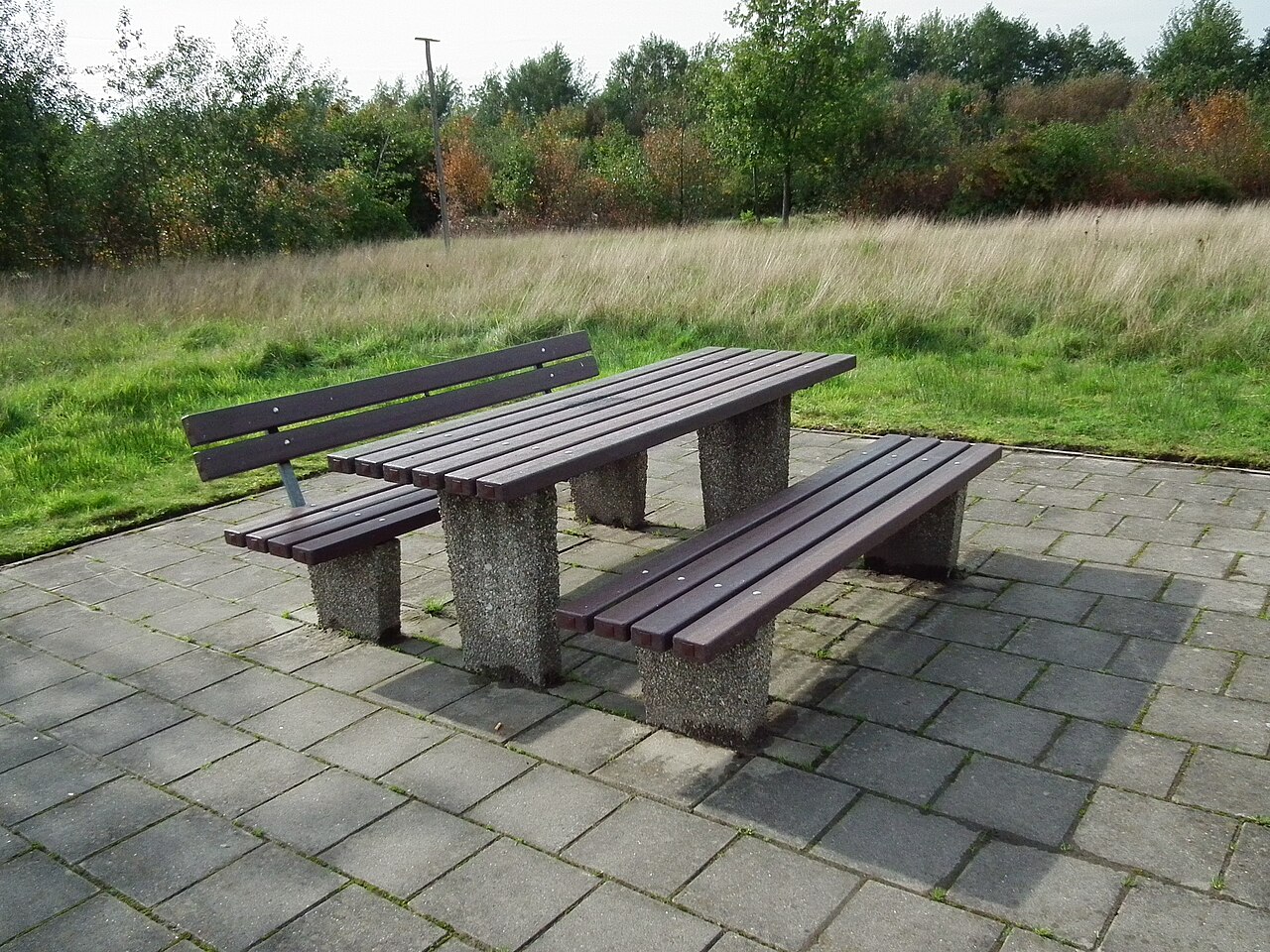

The stop is not optional
A petrol driver can cross a country with one five-minute stop. An electric one cannot, and on a long day will stop two or three times for twenty to forty minutes. Planners present this as a cost. Set against the driver-fatigue evidence, a forced break every couple of hours is closer to a benefit that the technology imposes whether or not anyone wanted it.
But where you stop is optional
Rapid chargers are sited where the grid connection is cheap, which frequently means the back of a retail park, an industrial estate, or a car park with no lighting and nothing open. A planner optimising purely on power and detour distance will route you to those without hesitation, because nothing in its objective function knows the difference.
For a solo driver at midday this is a minor annoyance. With children in the car, or arriving somewhere unfamiliar after dark, it is the difference between a break and forty minutes of sitting in a locked car.
What to look for
- Somewhere open at the hour you will actually arrive, not the hour you set off.
- Toilets that do not depend on a shop being open.
- Lighting and passing people, which matter more the later it gets.
- A second charger within a few kilometres, because the first may be broken.
Why most tools ignore this
Amenity data is expensive to gather and does not improve the metric planners compete on, which is total journey time. It is genuinely hard rather than merely neglected. It is also the row in the comparison table with the widest spread between products, and worth checking against your own situation rather than against a general recommendation.
References
Every citation below links to the original peer-reviewed record on PubMed or via DOI. Nothing here is a substitute for medical advice.
-
[Effect of fatigue on the fitness to drive] Makowiec-Dabrowska T, Bortkiewicz A, Siedlecka J, et al. · Medycyna pracy · 2011 · Review PubMed 21870418
-
Road safety research in China: review and appraisal Wang P, Rau PL, Salvendy G · Traffic injury prevention · 2010 · Review DOIPubMed 20730690
-
Dynamic Electric Vehicle Route Planning via Traffic Flow Prediction and Charging Service Integration Zhang Y, Shen X, Wang Y · Processes · 2026 · Journal article DOI
-
Optimizing Electric Delivery Vehicle Route Planning: A Hybrid Approach Integrating Clustering and Ant Colony Algorithm for Sustainable Transportation Heng S, Sharma A, Xiao J · Sustainability · 2026 · Journal article DOI
-
An Electric Vehicle Optimal Charging Path Planning based on an Improved A* Algorithm Chen X · Frontiers in Computing and Intelligent Systems · 2025 · Journal article DOI
-
Optimisation of Electric Vehicle Charging Stations Planning Based on Macro and Micro Perspectives WANG Q, DENG K, YAN J, et al. · Promet - Traffic&Transportation · 2025 · Journal article DOI
-
Personalised electric vehicle charging stop planning through online estimators Shafipour E, Stein S, Ahipasaoglu S · Autonomous Agents and Multi-Agent Systems · 2024 · Journal article DOI
-
Optimization model of battery electric vehicle charging facility layout towards embedded system and data mining algorithm Zhang P, Liu J, Luo N, et al. · International Journal of Emerging Electric Power Systems · 2024 · Journal article DOI
-
Electric Vehicle Distribution Route Optimisation and Charging Strategy Considering Dynamic Loads Wu Q, Tian M · Polish Journal of Environmental Studies · 2024 · Journal article DOI
-
Multi-Objective Electric Vehicle Route and Charging Planning with Contraction Hierarchies Cuchý M, Vokřínek J, Jakob M · Proceedings of the International Conference on Automated Planning and Scheduling · 2024 · Journal article DOI
-
Electric Vehicle Health Monitoring with Electric Vehicle Range Prediction and Route Planning Jayaram J, Chetan J, Nayak B · Journal of Informatics and Web Engineering · 2024 · Journal article DOI
-
Electric Vehicle Charging Route Planning for Shortest Travel Time Based on Improved Ant Colony Optimization Tan A, Wang C, Wang Y, et al. · Sensors · 2024 · Journal article DOI
-
Research and Evaluation of Electric Vehicle Charging Station Layout Planning Based on Greedy Algorithm Yu C, Chen M, Lu H, et al. · Highlights in Science, Engineering and Technology · 2023 · Journal article DOI
-
An Optimal Control Algorithm with Reduced DC-Bus Current Fluctuation for Multiple Charging Modes of Electric Vehicle Charging Station Chen T, Fu P, Chen X, et al. · World Electric Vehicle Journal · 2021 · Journal article DOI
-
Optimization Approach for Long-Term Planning of Charging Infrastructure for Fixed-Route Transportation Systems Blat Belmonte B, Rinderknecht S · World Electric Vehicle Journal · 2021 · Journal article DOI
-
Economic Microgrid Planning Algorithm with Electric Vehicle Charging Demands Yoon S, Kang S · Energies · 2017 · Journal article DOI
-
Driving fatigue in professional drivers: a survey of truck and taxi drivers Meng F, Li S, Cao L, et al. · Traffic injury prevention · 2015 · Journal article DOIPubMed 25357206
-
The impacts of multiple rest-break periods on commercial truck driver's crash risk Chen C, Xie Y · Journal of safety research · 2014 · Journal article DOIPubMed 24529096
-
Driver fatigue and highway driving: a simulator study Ting PH, Hwang JR, Doong JL, et al. · Physiology & behavior · 2008 · Journal article DOIPubMed 18402991