Explainer
What a green dot on a charger actually tells you
Live availability is the feature people pay for and the one most likely to be misunderstood. It reports what the operator said, not what you will find.
_Dresdner_Tor.jpg)
Occupancy is not the same as function
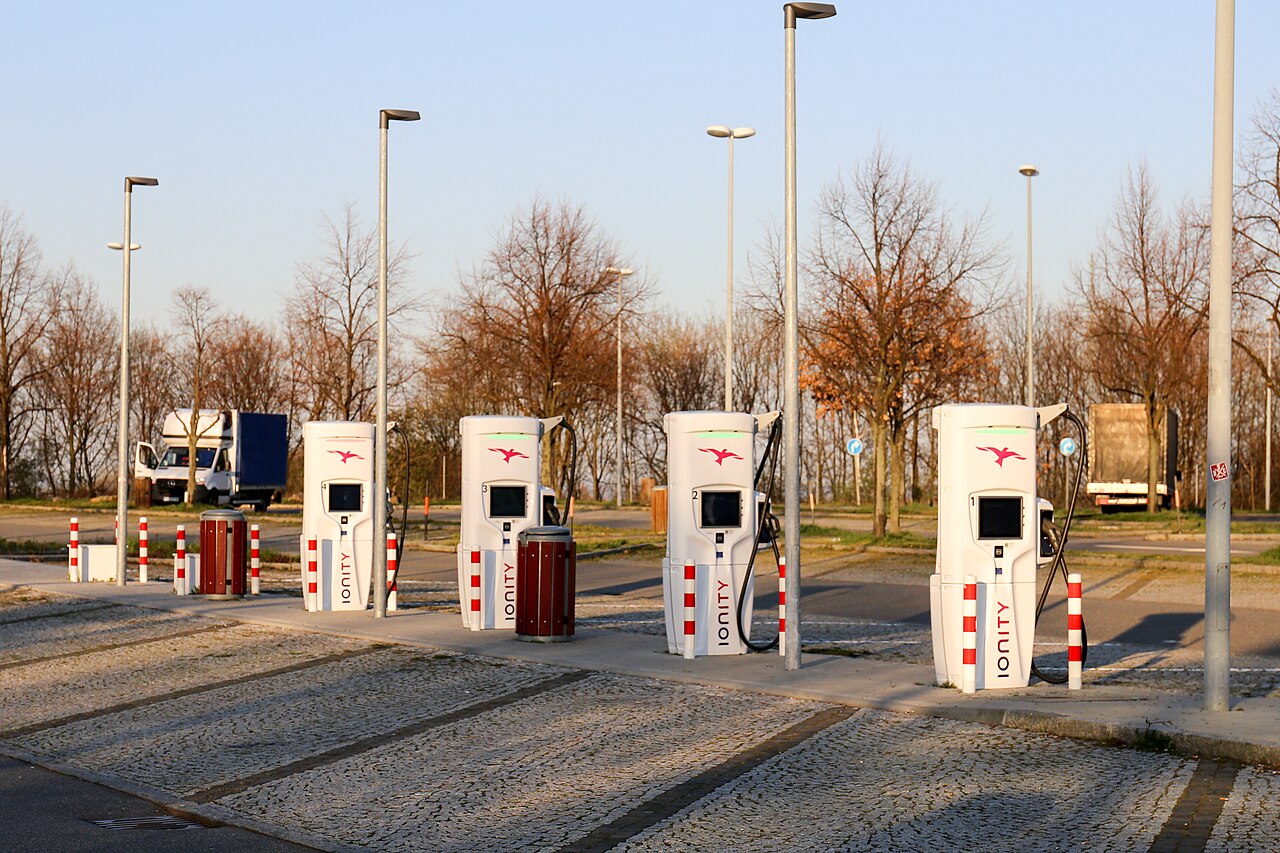
When an app shows a charger as available it means the operator’s back end reported that stall as unoccupied. It does not mean the payment terminal works, that the cable is undamaged, that the unit will hold its rated power, or that the bay is not blocked by a parked car the network cannot see.
These failure modes are exactly the ones that ruin a journey, and none of them appear in a status feed.
Why check-ins often beat the feed
A driver check-in reports an outcome: someone arrived, plugged in, and it worked or it did not. That is a different and more useful kind of evidence than a status flag, and it is why a community map with recent check-ins can be more trustworthy than a real-time feed with none.
The weakness is coverage. Check-ins are dense where drivers are dense and absent on the routes where you most need them, which is the inverse of what you want.
Carry one of each
The practical arrangement most experienced drivers converge on is a routing tool for the plan and a community map for the arrival — check the last few check-ins before committing to a stop, particularly a remote one. That is two apps, and the reason this site does not try to name a single winner.
The real mitigation
Reliability data helps at the margin. What actually removes the risk is planning to arrive with enough charge to reach a second site. That converts a broken charger from an emergency into an inconvenience, and it works regardless of whose data you trust.
.jpg)
Related reading
- What makes a navigation map usable while driving
- Range anxiety, explained: what an app can and can't fix
References
Every citation below links to the original peer-reviewed record on PubMed or via DOI. Nothing here is a substitute for medical advice.
-
Electric Vehicle User Behavior: An Analysis of Charging Station Utilization in Canada Jonas T, Daniels N, Macht G · Energies · 2023 · Journal article DOI
-
Dynamic Trust Formation in AI ‐Enabled Automation: A Longitudinal Case Study of an Advanced Driver Assistance System Koskinen K, Mallat N, Tuunainen V, et al. · Information Systems Journal · 2026 · Journal article DOI
-
Maternal mHealth usability strengthened by trust, governance, and navigation Azugbene E · Frontiers in Digital Health · 2026 · Journal article DOI
-
Toward Multimodal Seamless Navigation in Smart Cities: A Critical Review of Positioning, Navigation Data, Route Planning, and Guidance Kim M, Kim M, Lee J · ISPRS International Journal of Geo-Information · 2026 · Journal article DOI
-
User Experience of Public Electric Vehicle Charging Infrastructure in Shanghai: A Quantitative Analysis Xie X, Raval S, Deb S · World Electric Vehicle Journal · 2026 · Journal article DOI
-
Interpretable Station-Level Charging Congestion Pressure Assessment and Multi-Horizon Early Warning for Electric-Vehicle Charging Infrastructure Shi K · World Electric Vehicle Journal · 2026 · Journal article DOI
-
Correction algorithms of a navigation system and an autonomous inertial navigation system Surkova A.D., Neusypin K.А. · Automation Modern Techologies · 2026 · Journal article DOI
-
Cost and Availability Optimization for Electric Vehicle Charging Infrastructure via Redundancy‐Spares‐Repair Integration Najdawi F, Fainman E, Jin T · Quality and Reliability Engineering International · 2025 · Journal article DOI
-
Increasing Electric Vehicle Charger Availability with a Mobile, Self-Contained Charging Station Serrano R, Sultana A, Kavanaugh D, et al. · Sustainability · 2025 · Journal article DOI
-
Reliability Enhancement of Puducherry Smart Grid System Through Optimal Integration of Electric Vehicle Charging Station–Photovoltaic System Sasi Bhushan M, Sudhakaran M, Dasarathan S, et al. · World Electric Vehicle Journal · 2025 · Journal article DOI
-
Electric Vehicle and Charging Station Shinde N · International Journal For Multidisciplinary Research · 2025 · Journal article DOI
-
Electric Vehicle Charging Station Recommendations Considering User Charging Preferences Based on Comment Data Li H, Han Q, Bai X, et al. · Energies · 2024 · Journal article DOI
-
Reliability Enhancement of Fast Charging Station under Electric Vehicle Supply Equipment Failures and Repairs Konara K, Kolhe M, Ulltveit-Moe N, et al. · Energies · 2023 · Journal article DOI
-
Load Forecast of Electric Vehicle Charging Station Considering Multi-Source Information and User Decision Modification Zhuang Z, Zheng X, Chen Z, et al. · Energies · 2022 · Journal article DOI
-
Predicting Electric Vehicle Charging Station Availability Using Ensemble Machine Learning Hecht C, Figgener J, Sauer D · Energies · 2021 · Journal article DOI
-
Leveraging User Preferences to Develop Profitable Business Models for Electric Vehicle Charging Röckle F, Schulz T · World Electric Vehicle Journal · 2021 · Journal article DOI
-
Eye tracking in usability of electronic chart display and information system Arslan O, Atik O, Kahraman S · Journal of Navigation · 2020 · Journal article DOI
-
DRIVER PREFERENCE CONCERNING IN-CAR ROUTE GUIDANCE AND NAVIGATION SYSTEM MAPS FOR DRIVERS WITH COLOR VISION DEFICIENCY Oliveira R, Pugliesi E, Ramos A, et al. · Boletim de Ciências Geodésicas · 2018 · Journal article DOI
-
EVALUATION OF USABILITY OF MAPS OF DIFFERENT SCALES PRESENTED IN AN IN-CAR ROUTE GUIDANCE AND NAVIGATION SYSTEM Ramos A, Pugliesi E, Oliveira R, et al. · Boletim de Ciências Geodésicas · 2018 · Journal article DOI
-
PREFERENCE FOR MAP SCALE OF IN-CAR ROUTE GUIDANCE AND NAVIGATION SYSTEM Ramos A, Decanini M, Pugliesi E, et al. · Boletim de Ciências Geodésicas · 2016 · Journal article DOI
-
Route guidance by a car navigation system based on augmented reality Akaho K, Nakagawa T, Yamaguchi Y, et al. · Electrical Engineering in Japan · 2012 · Journal article DOI